4 Anatomical Truths About Dermal Fillers and Facial Volume Restoration
SKN Loft • September 22, 2026
When people start noticing a tired or aged appearance in the mirror, they often blame new wrinkles or sagging skin. However, the true culprit for many facial changes is a hidden structural shift occurring beneath the surface. At SKN Loft, we find that clients are frequently surprised to learn how their underlying bone structure and fat pads naturally shift over time. Understanding this internal anatomy is the secret to achieving a refreshed look without ever appearing artificial.
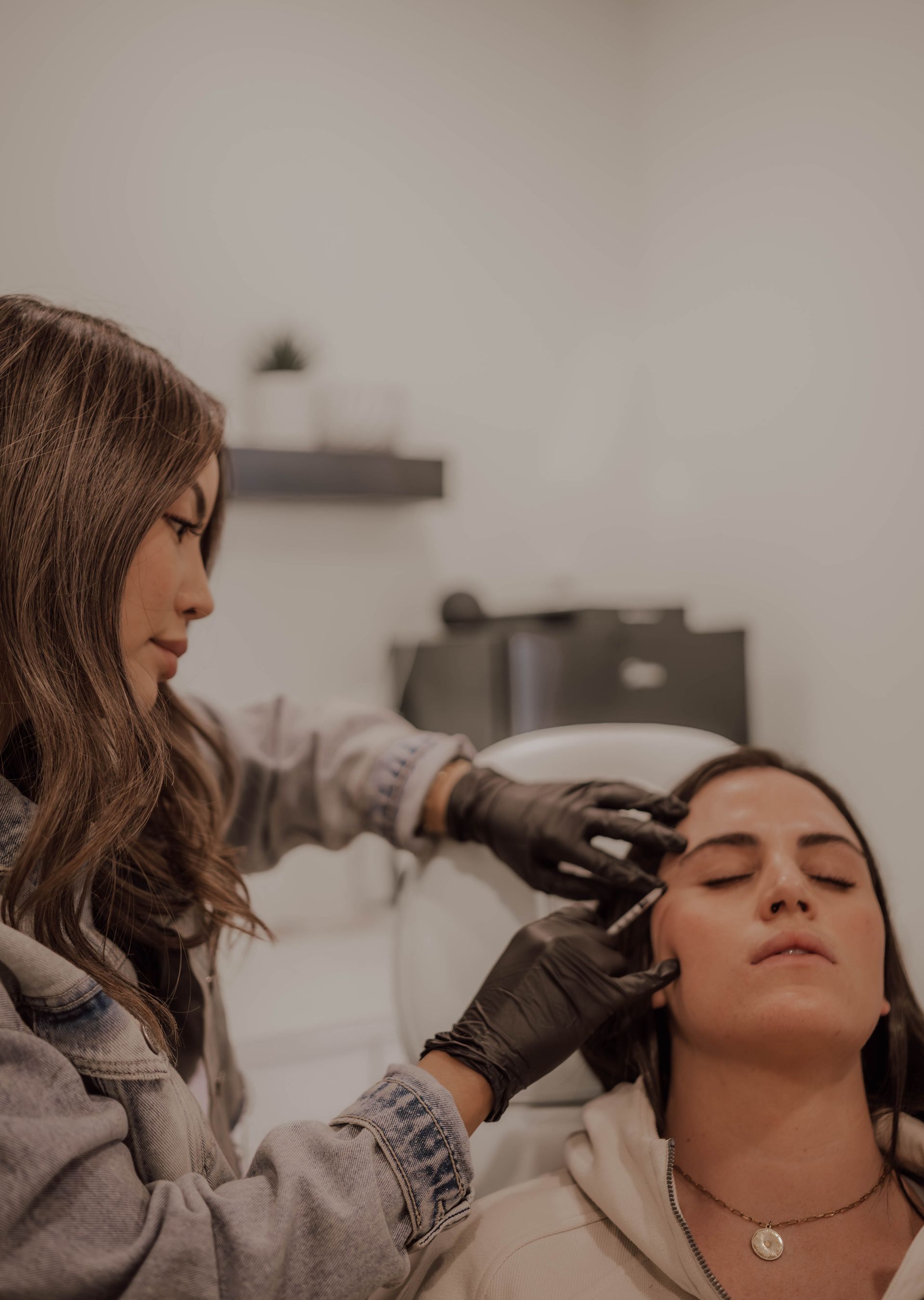
The aesthetic industry sometimes focuses so heavily on erasing lines that it ignores the architectural foundation of the face. Using dermal fillers for volume loss is not about simply pumping up the cheeks; it is about meticulously restoring those shifted fat pads to their original positions. When placed correctly, this treatment supports the overlying tissue and provides a subtle, natural lift. By learning the anatomical truths of facial aging, you can approach cosmetic injectables with confidence and clear expectations.
In This Article:
- Truth #1: Acknowledge the Loss of Bony Support
- Truth #2: Understand How Fat Pads Migrate
- Truth #3: Recognize That Overfilling Creates Distortion
- Truth #4: Value the Importance of Strategic Placement
- Frequently Asked Questions
Truth #1: Acknowledge the Loss of Bony Support
Most people assume that facial aging is entirely a skin issue, but your actual skeleton changes significantly as the years pass. This structural shift forms the foundation for many visible cosmetic concerns.
• Bone Resorption: Starting in our late thirties, the facial bones begin a slow process of resorption, literally shrinking and providing less scaffolding for the tissue above.
• Orbital Hollows: As the bone around the eye socket recedes, the area appears more sunken, contributing to the look of deep under-eye circles.
• Jawline Changes: The mandible also loses density, which reduces the crisp angle of the jaw and allows the skin on the lower face to loosen.
Truth #2: Understand How Fat Pads Migrate
Beneath your skin lie distinct compartments of fat that give a youthful face its plump, rounded contours. How these pads behave over time dictates where you will see hollows and where you will see heaviness.
• Downward Migration: Gravity and repetitive movement cause these once tightly packed fat compartments to slowly slide downward toward the jawline.
• Midface Deflation: As the fat pads leave the cheek area, the midface loses its natural projection and begins to look flat or tired.
• Nasolabial Folds: The migrated fat accumulates around the mouth, pushing the skin forward and creating deep shadows often referred to as smile lines.
Creating a balanced, restful experience during these corrective treatments is something clients notice firsthand. It is a pattern the team at SKN Loft hears regularly from our dedicated clients.
► Client Experience: The Relaxation, Care, and Attention to detail at SKNLoft is a must experience. I recently booked a Custom Facial and reminded myself why this treatment needs to become a regular part of my routine. Rebecca, thank you so very much for your time and expertise - Tegan Olesen
Taking the time to understand your unique anatomy ensures that every service, from injectables to facials, provides that same level of precise care.
Truth #3: Recognize That Overfilling Creates Distortion
A common fear surrounding injectables is ending up with the unnatural, puffy look often seen in reality media. This occurs when a practitioner ignores the anatomical limits of the tissue.
• Tissue Tension: Placing too much volume into a single fat pad stretches the skin excessively, leading to a swollen, artificial appearance.
• Loss of Definition: Overfilling the midface actually obliterates the natural shadows and contours that make a face look youthful and defined.
• Migration Risks: When an area is over-injected, the product can spread into adjacent compartments, creating unwanted heaviness instead of a lifted effect.
► A single high-impact fact is that true facial rejuvenation requires replacing only the volume that was lost, rather than attempting to create contours that never naturally existed.
Truth #4: Value the Importance of Strategic Placement
The artistry of modern injectables relies entirely on placing the product in exactly the right anatomical plane. A skilled practitioner acts more like an architect than a painter.
• Deep Injections: Placing product deep against the bone mimics the lost skeletal support and provides structural lift without surface puffiness.
• Superficial Support: Lighter products are placed closer to the surface only when softening very specific, fine lines.
• Indirect Lifting: Sometimes, treating the temples or the lateral cheeks provides enough upward tension to naturally smooth out the lower face.
→ From a professional standpoint: The most successful volume restoration plans often involve treating areas adjacent to your primary concern to provide a supportive lift rather than just filling the crease itself.
Frequently Asked Questions
What happens when you stop getting dermal fillers?
Your body will slowly and naturally metabolize the hyaluronic acid gel over a period of six months to two years, depending on the product used. Once it is fully dissolved, your face simply returns to its pre-treatment state, continuing its natural aging process from that point forward. The skin does not sag more than it would have otherwise; in fact, the temporary expansion often leaves the tissue looking slightly better than before due to the added hydration.
Do dermal fillers stimulate collagen?
Standard hyaluronic acid injectables primarily work by immediately replacing lost volume and holding moisture in the tissue. However, the physical presence of the gel does create a mild stretching effect on the fibroblasts, which can encourage a small amount of natural collagen production over time. For robust collagen stimulation, we often recommend pairing your injectables with treatments like Exion Face or Sylfirm X.
Where do you put filler for lower face sagging?
Directly injecting deep nasolabial folds or marionette lines is often the wrong approach, as it just adds weight to an already heavy lower face. Instead, we typically place the product higher up in the lateral cheeks and midface to restore the structural support that has slipped downward. By re-anchoring the midface, we create an upward tension that naturally lifts the lower facial skin.
Restore Your Natural Contours
Understanding the structural mechanics of your face is the key to achieving beautiful, undetectable results. Our team in Cochrane is dedicated to restoring your natural volume with precision and anatomical respect. Book a consultation today to discuss how a targeted injectable strategy can beautifully refresh your appearance.
Share This Blog